





Introduction: The selection of filtration accuracy is central to procurement decisions. Neither higher accuracy nor lower accuracy necessarily equates to better performance or greater cost-effectiveness. From a procurement perspective, this article provides a scientific framework for model selection to help avoid substantial costs arising from “accuracy misalignment.”
01 Why the filtration accuracy selection should not be made blindly
In large-scale industrial production, filtration accuracy directly impacts product quality, equipment lifespan, and operating costs. Blind pursuit of high precision or neglect of accuracy requirements can result in hidden losses for enterprises.
Industry Applications and Precision Requirements
| Industry/Application | Precision Requirements and Specifications |
| Fine Chemicals / Electronics | With particle sizes ranging from 1–5 μm to submicron levels, it features precision nozzles that ensure product purity. |
| circulating water / cooling water | Fine filtration at 50–100 μm to prevent scaling and reduce wear on the pump assembly. |
| Pharmaceuticals / Food | Absolute precision interception ensures complete separation of microorganisms from impurities. |
| Oil/Petrochemicals | High flow rate and high-pressure environment; balance accuracy versus long-term stability of flux |
02 Clarifying the Two Core Definitions of Precision
According to standards such as GB/T 26114-2024, procurement technical specifications must not merely specify micron values; they must clearly indicate the precision category.
| Precision Type | Retention Efficiency / Beta Value | Application Scenarios and Representative Devices |
| Nominal Precision | Between 50% and 95% | Primarily used for preliminary front-end processing and protection of high-flow circulating water systems. Representative devices: self-cleaning filters, basket filters. |
| Absolute Precision (Absolute) | ≥99.9%, β-value ≥1000 | Adapted for high-purity raw materials in lithium batteries and sterile production in pharmaceuticals. Representative equipment: candle filters, precision filter cartridges. |
03 Four Core Dimensions of Precision Selection
Before finalizing the accuracy parameters, the purchaser must clarify the following four key points to ensure precise model selection alignment:
| dimension | explain |
| Back-end Device Protection Level | Specify the allowable particle size for the most vulnerable backend component. Typically, filtration accuracy should be 1/5 to 1/10 of this size. |
| Particle size distribution | Determine the impurity composition through particle analysis. If large particles are predominant, add a pre-filtration stage instead of merely improving single-stage accuracy. |
| Allow pressure difference and flow rate | Higher accuracy results in greater resistance. Ensure the initial pressure difference remains within the system’s allowable range at rated flow rate. |
| Filter efficiency (filtration ratio) | Pay attention to the Beta value. For a diameter of 10 μm, the significance of an 90% interception rate is entirely different from that of a 99.9% interception rate. |
04 Comparison Table of Precision Range for Mainstream Filtration Equipment
| Device Category | Precision Interval | Adaptation Scenario |
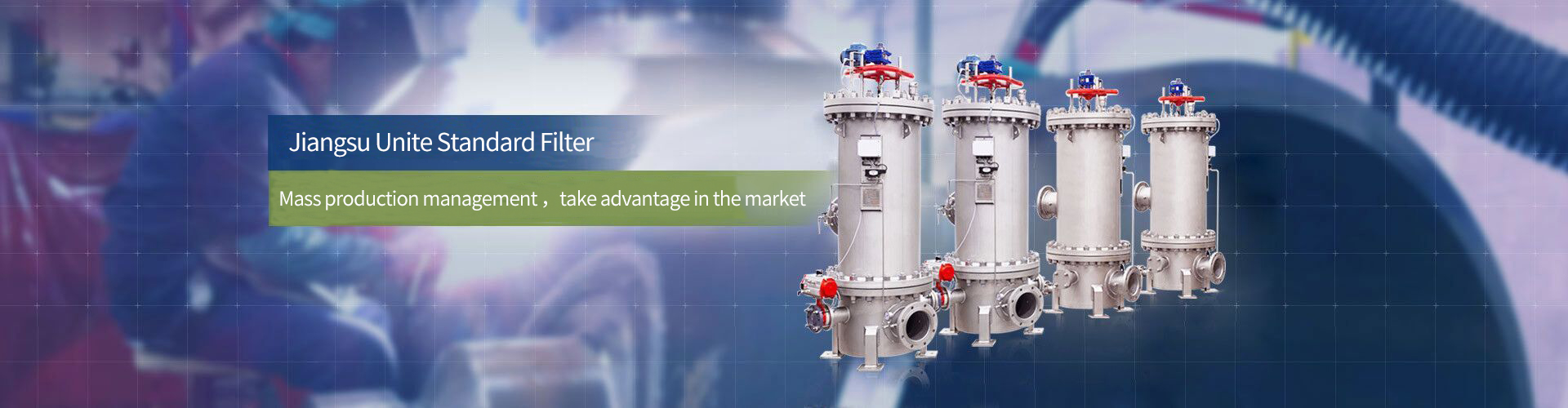
| Self-cleaning filter | 20–500 μm (standard) | Lithium battery circulating water, thermal power generation, and raw water pretreatment |
| Basket/Pipe Filter | 50–300 μm (standard) | Coarse protection for oil pipelines and chemical circulation pipelines |
| Multi-pouch filter | 1~200μm | Secondary stage: pre-filtration; pretreatment with chemical solvents |
| Precision filter cartridge | 0.1–20 μm (absolute) | Ultra-pure water, fine chemical intermediates – safety filtration required. |
| Fully Automatic Candle-Type Filter | 0.1–50 μm (absolute) | Lithium battery slurry, catalyst recovery, final filtration |
05 Standard Three-Level Configuration for Large Projects
Core Gradient Configuration Solution:
- Primary coarse filtration: 20–500 μm – intercepts 70% of large particles, protecting the subsequent precision filter media.
- Secondary ultrafiltration: 1–20 μm – removes colloidal suspended particles, serving as a safety barrier for the membrane/pump system.
- Third-stage terminal ultrafiltration: 0.1–1 μm – used for product purification, sterile filtration, and catalyst recovery
Core advantages of gradient design
- Compared to single-stage high-precision systems, the filter element replacement cost is reduced by over 40%, and system operating energy consumption decreases by 25%–35%.
- Impurity fractionation retention ensures stable system pressure differential fluctuations, reduces start-stop shock on equipment, and extends the service life of the entire filtration system.
06 Total Life Cycle Cost: The Trade-off Between Precision and Profitability
The choice of filtration accuracy directly determines the system’s operating costs. For every level up in accuracy, operating costs often increase exponentially.
Consumable costs: High-precision filter elements are expensive and require frequent replacement, constituting the major long-term expense component.
Energy consumption cost: The high pressure drop resulting from high precision significantly increases the power consumption of the pump unit.
Maintenance time: Downtime and labor costs incurred due to frequent filter element replacements
Risk mitigation: Appropriate precision redundancy prevents system failure under sudden operational conditions.
The Golden Rule for Selecting Unite Filter Products
- The optimal precision lies precisely in being “just right”; one must avoid blindly pursuing micron-level accuracy.
- Multi-stage filtration (coarse + fine) is generally more economical and stable than single-stage high-precision filtration.
- Select suppliers with operational analysis capabilities and make decisions based on actual data rather than experience.




 unite@unitefilter.com
 No. 24 all the way,industrial park,new area,Wuxi
  0510-85956566 400-668-0669


